Jane Belinda Therapy
Anxiety Counselling
"There is more to life than being a passenger.” Amelia Earhart.
a self-trusting woman is an unshakeable woman
Anxiety
Anxiety is more than feeling worried. It can feel like a mind that never switches off, a body that never truly relaxes and an exhausting pressure to keep everything under control.
Many of the women I work with are highly capable, caring and successful. They are often the people others rely on, yet behind the scenes they are battling constant overthinking, people-pleasing, perfectionism and the feeling that they can never quite do enough.
Rather than seeing anxiety as something that needs to be “fixed”, I see it as a signal that your nervous system has been working hard to protect you. We will look at the root cause, build tools to support restoring moments of calm, identify your choices to reduce feeling trapped and expand your support network as we all need safe relationships in our lives.

Did you know?
Anxiety disorders are the most common mental health condition worldwide, affecting around 359 million people.
One in five adults (20.2%) in England are living with a common mental health problem – with rates higher in women (24.2%) than men (15.4%)
In the UK, around 37% of women reported high levels of anxiety in recent surveys, compared with around 29% of men.
27.6% of people with an anxiety disorder don't receive any treatment whatsoever.
37.1% of women and 29.9% of men have a common mental health condition with anxiety disorders being a significant part of this figure.
Women in menopause, 58% felt more anxious and overwhelmed by things that would previously not have affected them.
Research suggests women are more likely to carry caring responsibilities, emotional labour and chronic stress, all of which can contribute to anxiety alongside biological and life experiences.
A staggering nearly nine in 10 women over 50 are facing mental health struggles but feel the need to hide it.
The negative consequences of holding back included trouble sleeping (59%), gaining or losing weight (43%), avoiding social events (38%) and withdrawing from friendship groups (28%)
Women said they did not want to burden people (4%), felt they needed to “hold it together” for others (45%), feared that other people would not understand (27%), and tended to keep a “stiff upper lip” (24%).

Is This You?
- Your mind rarely switches off
- You overthink conversations long after they have happened
- You feel responsible for everyone else's happiness
- You find it difficult to relax without feeling guilty
- You constantly worry about getting things wrong
- You put pressure on yourself to be the one who copes
- You struggle to say no, even when you're overwhelmed
- You feel emotionally exhausted but keep pushing through
- You long to feel calmer but don't know how to slow down
- You feel invisible to others yet you're the women keeping everyone and everything together
- You may have physical symptoms of back ache, digestive issues, headaches and auto-immune diseases
- You sleep poorly, waking up several times, struggling to go back to sleep or struggling to fall asleep
Types of Anxiety I Support
Generalised Anxiety
Persistent worry about everyday life, often feeling unable to switch off or relax.
Social Anxiety
Worry about being judged, criticised or getting things wrong in social or professional situations.
Health Anxiety
Persistent worry about your health, bodily sensations or the possibility of serious illness.
Panic Attacks and Panic Disorder
Sudden episodes of overwhelming fear, physical symptoms and a fear that they may happen again.
High-Functioning Anxiety
Appearing successful and capable while privately battling self-doubt, perfectionism and constant pressure.
Anxiety linked to Trauma or Childhood Experiences
When anxiety develops as a response to earlier experiences where your nervous system learnt that the world wasn’t always safe.
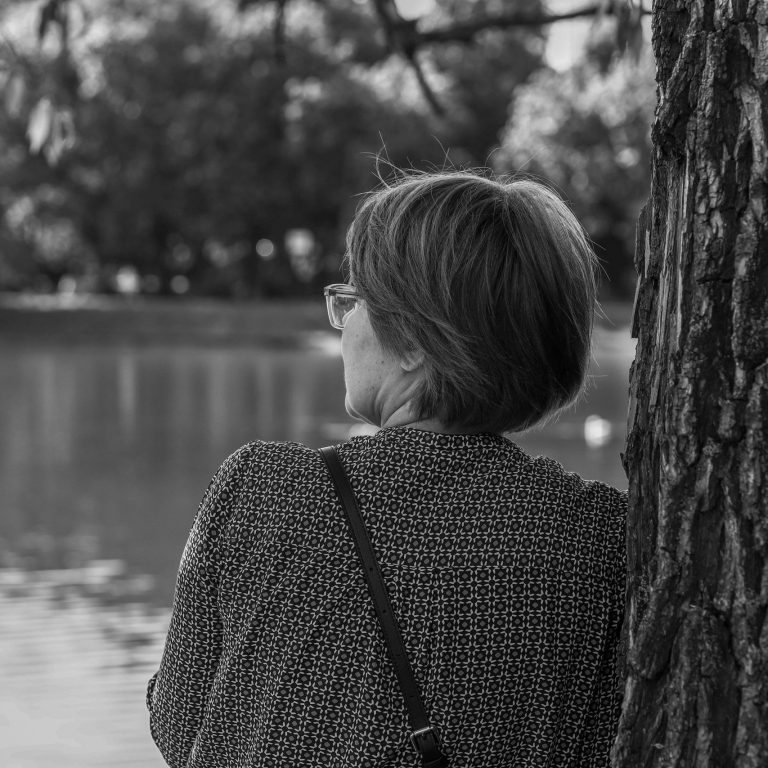
Therapy isn’t about becoming a different person. It’s about rediscovering who you are beneath the anxiety and the adaptations you learnt to survive.
“No woman should be made to fear that she was not enough.” Samantha Shannon
How I Work
My approach goes beyond teaching coping strategies. While techniques are an integral part of my work, lasting change often comes from understanding why anxiety developed in the first place.
I work relationally and integrate trauma-informed therapy such as attachment theory, working with protective and defensive parts, exploring the emotions that might be at the root of anxiety, learning from neuroscience on why nervous systems get stuck in 'flight' mode and grounded somatic practices to regulate a frayed nervous system.
When working towards a life with less anxiety, I incorporate personal values and work with you to make small commited actions to embody the person you want to be. Together we explore the experiences and patterns that shaped your anxiety, while helping you develop a kinder relationship with yourself and the confidence to make different choices.
Looking beyond Anxiety
I don't see anxiety as something that is 'wrong' with you.
More often, I see it as an intelligent response from a nervous system that has learnt to stay alert, anticipate danger or keep the peace.
For some women, anxiety develops after years of carrying too much responsibility, ignoring their own needs or feeling they always have to get things right. For others, it can be linked to experiences where expressing emotions such as anger, sadness or fear didn’t feel safe.
Emotions such as anger have been pushed aside for so long that they no longer recognise them. Instead, those feelings may show up as tension, anxiety, overthinking, people-pleasing or an inability to relax.
Over time, these protective responses can become so automatic that they begin to shape how you see yourself and the world. What once helped you cope may now leave you feeling constantly on edge, overwhelmed or disconnected from yourself.
Rather than simply trying to reduce anxiety, we’ll become curious about what it might be trying to communicate. Together, we’ll explore the patterns beneath it, helping you reconnect with your emotions, your needs and your authentic self so that change comes from understanding, not just symptom management.
Testimonial
"I am so pleased I reached out for help at a time when I was unable to cope I can’t thank Jane enough for helping me through one of the most painful emotional times in my life " S.B